Reviewed by Hasitha K. Balasooriya · Managing Director, Gemszen (Pvt) Ltd · 8 years of gem-industry experience · Updated 6 October 2026
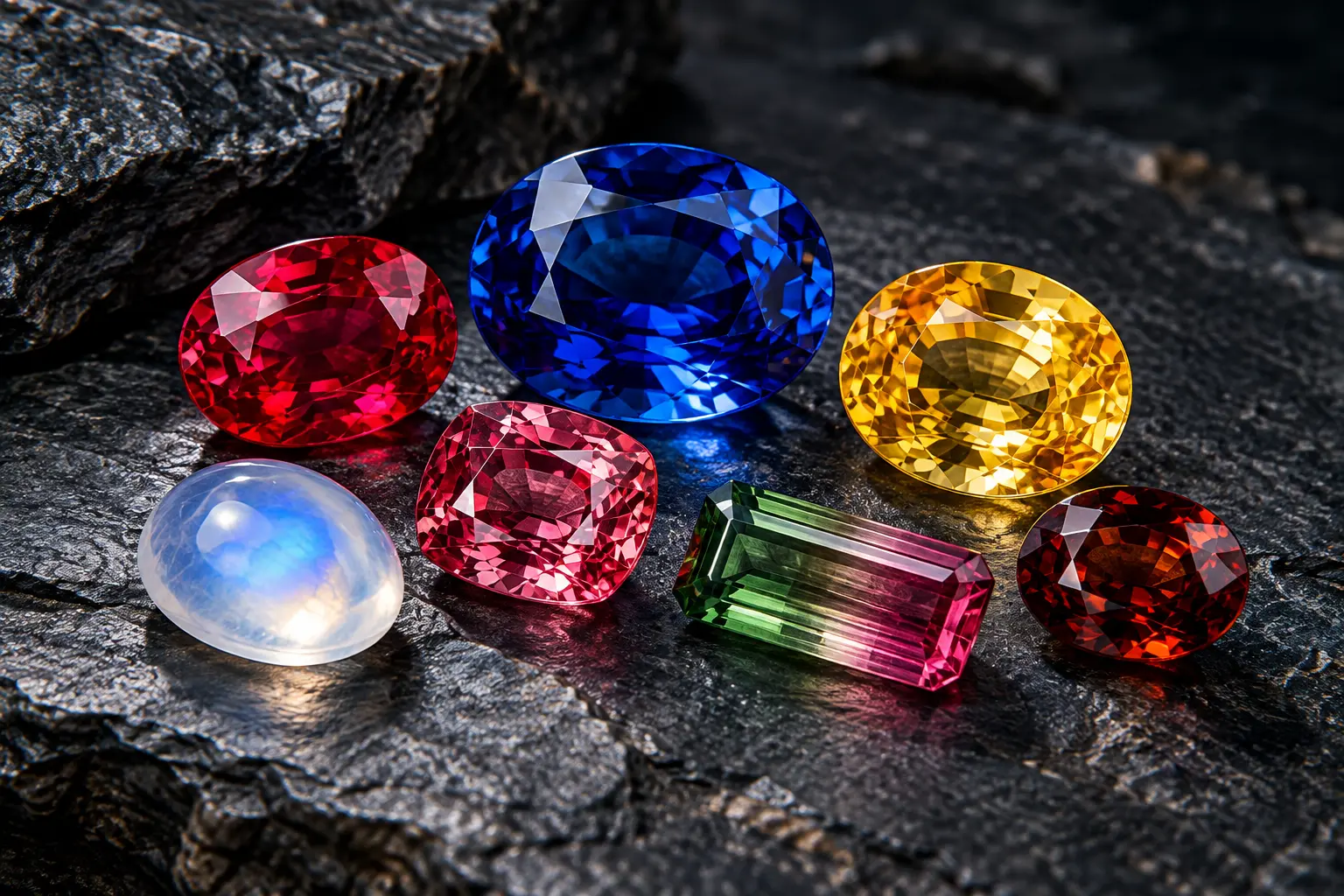
ශ්රී ලංකාවෙන් නිල් මැණික්, රතු මැණික්, පසිංගල්, කනක, වෛරෝඩි, පද්මරාග, තෝරමල්ලි, සිර්කෝන් සහ සඳකැන් වැනි විවිධ මැණික් හමුවේ. නම හෝ පාට පමණක් භාවිතා කර ගලක ස්වභාවය හෝ වටිනාකම තීරණය නොකළ යුතුය.
Why Sri Lanka is called the Island of Gems
Sri Lanka’s central and southern highlands contain ancient metamorphic rocks and widespread secondary alluvial deposits. Over long periods, weathering released durable gem minerals from their host rocks and concentrated them in gem-bearing gravels known locally as illam. Ratnapura, Elahera and several other districts are internationally known gem-producing areas.
Important gemstone varieties
Corundum occurs as blue, yellow, pink, white and padparadscha sapphire, as well as ruby. Sri Lanka also produces spinel, chrysoberyl including cat’s-eye and alexandrite, garnet, zircon, tourmaline, topaz, quartz varieties and moonstone. Colour, transparency, inclusions, treatment and cutting quality vary greatly within each variety.
What buyers should verify
A responsible purchase begins with identity: is the material a natural gemstone, a laboratory-grown product or an imitation? The next questions concern treatment, weight, measurements, colour, clarity, cut and—when relevant—geographic origin. A recognised laboratory report can provide independent information about identity and detectable treatment.
Frequently asked questions
What is the most famous Sri Lankan gemstone?
Ceylon blue sapphire is the best-known, although Sri Lanka produces many other important varieties.
Are all Sri Lankan sapphires unheated?
No. Both heated and unheated sapphires are traded. Treatment status should be disclosed and supported by testing where necessary.
Can origin be confirmed by appearance alone?
No. Geographic-origin determination can require advanced laboratory comparison and may not always be conclusive.