Reviewed by Hasitha K. Balasooriya · Managing Director, Gemszen (Pvt) Ltd · 8 years of gem-industry experience · Updated 6 October 2026
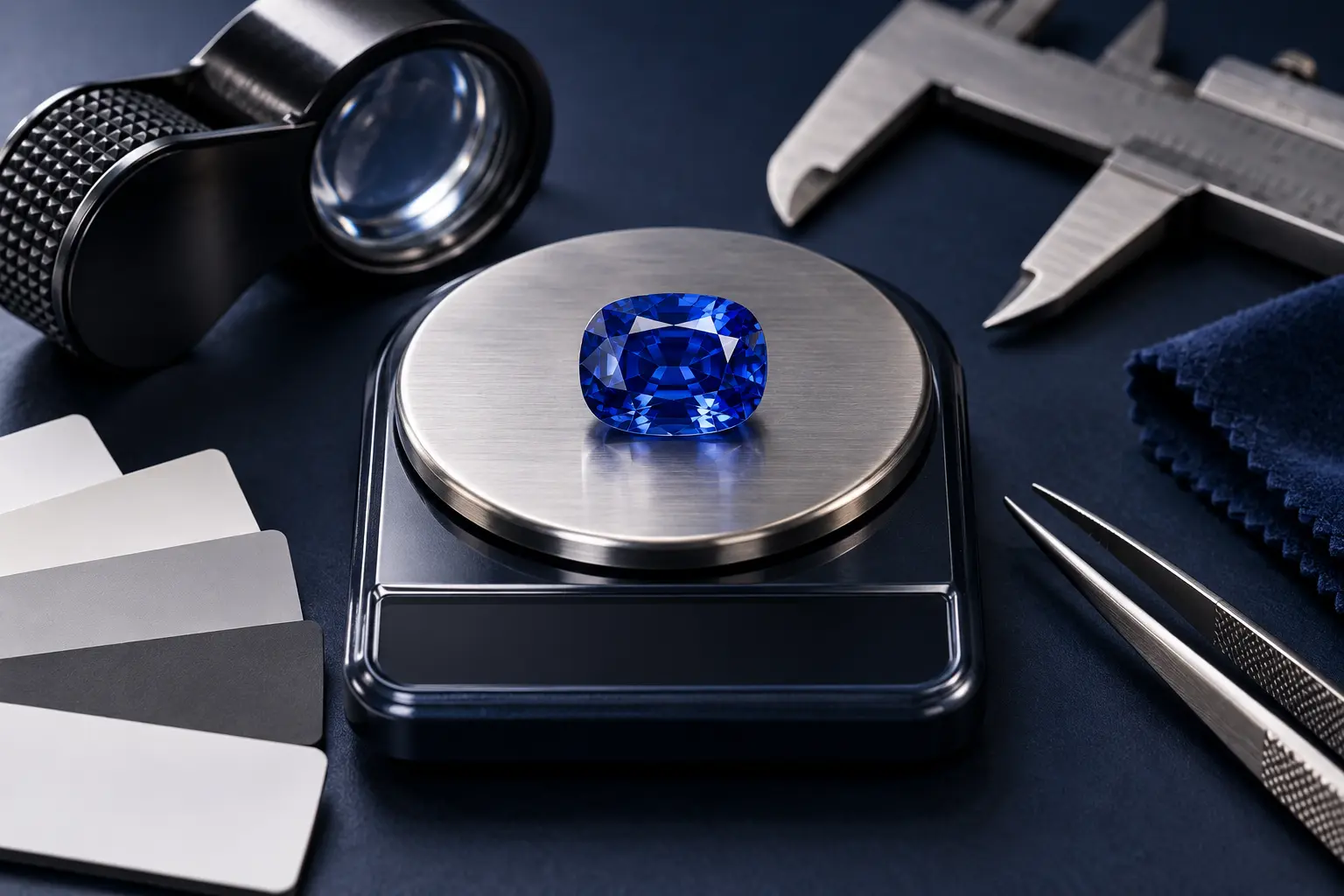
මැණික් ගලක මිල පාට හෝ කැරට් බර පමණක් අනුව තීරණය නොවේ. ගල් වර්ගය, වර්ණය, පැහැදිලිභාවය, කැපුම, බර, ප්රතිකාර, දුර්ලභභාවය, වෙළඳපොළ ඉල්ලුම සහ සහතිකය එකට බලපායි.
Identity comes first
Before quality or value can be discussed, the material must be correctly identified. A natural sapphire, synthetic sapphire and blue glass may look similar to an inexperienced observer but belong to very different market categories.
The 4Cs in coloured gemstones
Colour often has the greatest visual influence, but clarity, cut and carat weight remain important. Unlike diamond, coloured stones are not all judged by one standardised grading scale. Each variety has its own market preferences and typical inclusion pattern.
Treatment, origin and documentation
Detectable treatment can influence price and must be disclosed. For certain fine rubies and sapphires, an origin opinion may influence demand, but origin does not replace quality evaluation. A report adds information; it is not a guarantee of price.
Frequently asked questions
Can gemstone value be calculated from carat weight alone?
No. Weight must be considered with identity, quality, treatment, cut, rarity and market demand.
Does a certificate state the selling price?
Identification reports generally describe the gem and treatment findings; they do not automatically establish a retail or resale price.
Is a flawless coloured gemstone always best?
Not always. Some inclusions are expected, and excessive clarity can raise questions that require further testing. Overall beauty and reliable identity matter.